
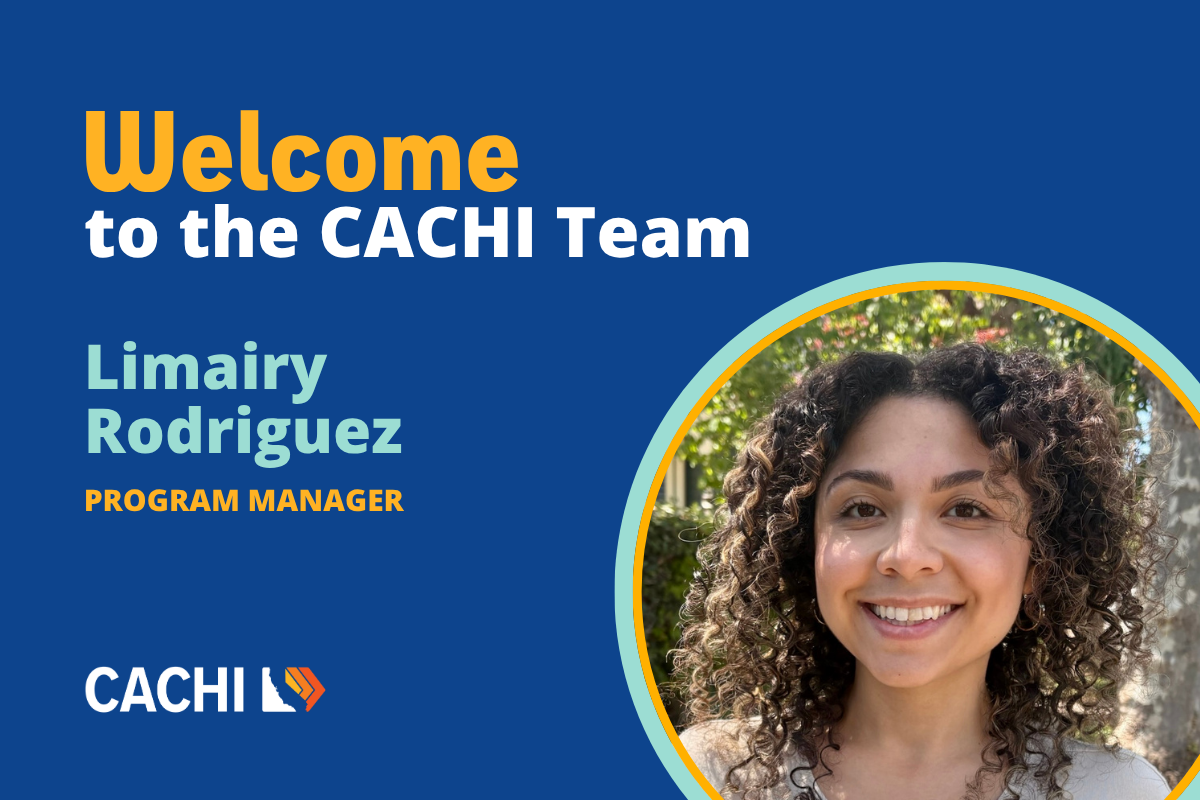
What drew you to this work and to CACHI in particular?
I’ve always been drawn to work that asks a bigger question than, “How do we make this program better?” I’m interested in what it takes to actually change the conditions that shape people’s health and lives and, importantly, who gets to decide what that change looks like.
That’s what drew me to CACHI. I really believe in the idea that communities should have agency in shaping the systems they live within, rather than having solutions handed down to them. I’m especially drawn to Accountable Communities for Health [ACHs] because they create space for that kind of community leadership while also working toward the policy and systems changes that can make an impact beyond any one program or moment.
There’s also something really meaningful to me about being able to support the infrastructure behind that work. I love program management, but I’ve realized that what excites me most isn’t simply managing a project from beginning to end — it’s helping people, relationships, and ideas move forward in a way that makes the work stronger and more sustainable. CACHI felt like a place where I could bring my skills, my care for this work, and my belief in community power together in a way that feels both practical and deeply aligned with my values.
Tell us about a time in your personal experience when you saw a community really shape a decision, or struggle to shape one. How does that affect your perspective on your role at CACHI?
One experience I often think about came from my time in local public health, when I was supporting policy work in Oakland. There was strong community momentum behind a proposed tobacco policy, and I also had the opportunity to hear from local retailers who had concerns about what the change could mean for their businesses and felt they hadn’t really been part of the conversation. I remember being struck by the tension between those perspectives: both were coming from people with a stake in their community, but they were experiencing the policy and the decision-making process very differently.
What stayed with me was the realization that “the community” is rarely one unified voice. People can share a place and still have very different experiences, interests, and relationships to a policy. It made me more curious about what meaningful participation actually looks like when people disagree. I came to see that engagement sometimes means creating enough space for people to understand what is happening, express what they need, and have some influence over the process — even when the ultimate decision may not reflect everything they asked for.
At CACHI, I see my role as helping create the conditions for our ACH communities to exercise agency: making space for different perspectives, strengthening relationships, connecting the sites to resources and one another, and helping each community across the ACH network ensure that community knowledge shapes decision-making. Community voice and influence are central to the ACH approach. This doesn’t mean that everyone agrees, but that people have a genuine opportunity to shape what happens next.
What are you hoping to learn from the network in your first few months?
I’m looking forward to getting to know the network and hearing what each ACH is working toward and what they’re navigating. I’m excited to understand not only their work, but also the relationships and context shaping it.
And to offer the best support, it’s important to learn where the network, collectively, sees gaps: who might be missing from the conversation, where are there missed or new opportunities to connect people, and what can CACHI do to respond to their needs? With so many changes happening in the public health and funding landscape I hope to build enough understanding to be thoughtful about when to listen, when to ask questions, and when to lean in and help move something forward.
What's something people might be surprised to learn about you?
I’m from the Rio Grande Valley in South Texas, the same region that gave us Gloria Anzaldúa, the groundbreaking Chicana feminist writer and thinker who challenged the borders between cultures, languages, identities, and ways of knowing. And as a Mexican, I am also still regularly grieving the fact that Selena Quintanilla left us far too soon. What a gift she was to us. She gave us so much to celebrate, and I only wish we had gotten more time with her! Yes, if Selena comes up in conversation, I will probably have something to say about it. Just please don’t play “Dreaming of You” unless you want to see me pout!
I guess the one surprising thing might be that I carry a lot of pride for where I come from — for the writers, artists, musicians, and people who have shaped how I see the world. And I’m forever grateful for their legacy.