
A Conversation with Jacqueline Franco-Silva
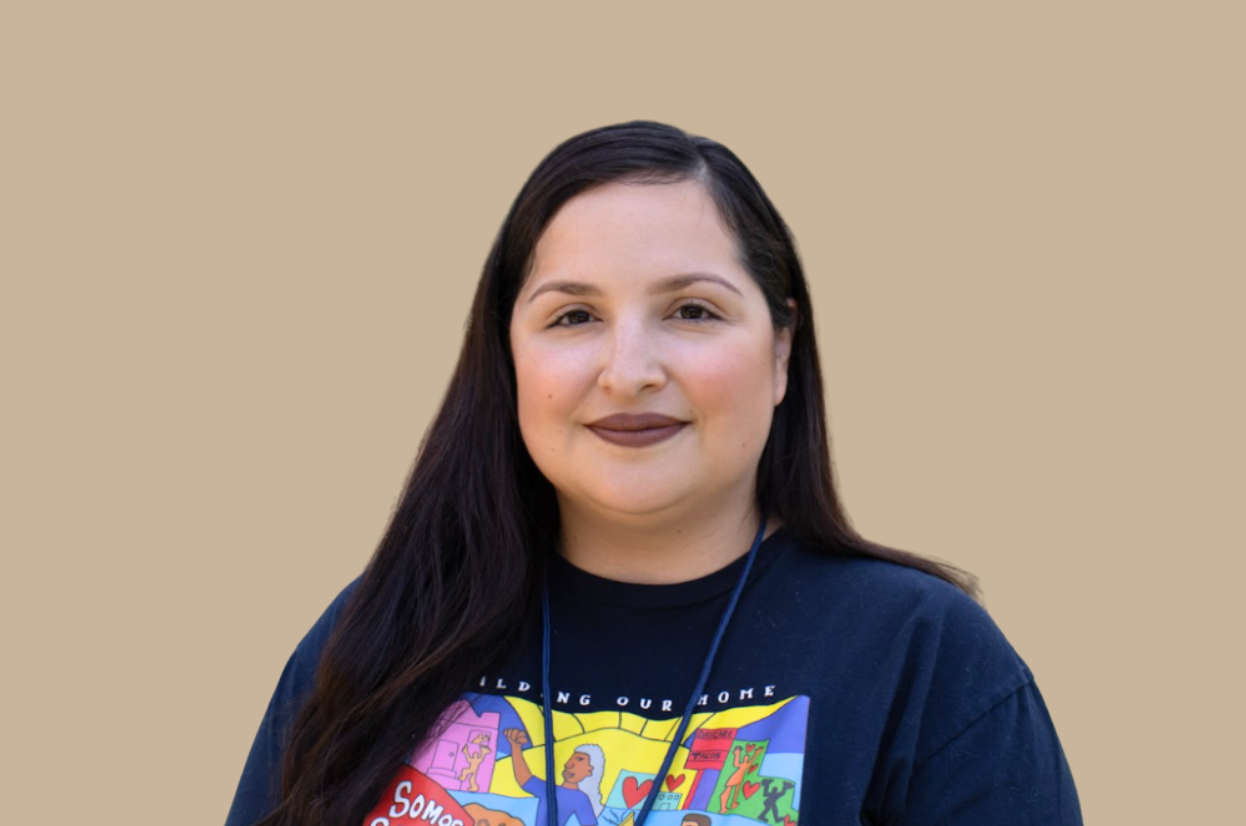
When Jacqueline Franco-Silva first heard about what would eventually become East San José PEACE Partnership (PEACE), it wasn't a fully formed initiative with a name and a strategic plan—it was just an idea. But something about PEACE felt different from the spaces she'd been called into before. This time, she wasn't being asked to comment on something already decided. She was being asked to help build it.
That early experience set the tone for a journey that would take Jacqueline from resident and community organizer to shared leadership within PEACE—one of 36 Accountable Communities for Health (ACHs) across California—and most recently to a Program Associate role with CACHI, where she now supports peer learning and network collaboration across the state.
We sat down with Jacqueline to hear about that path, and what it really means to center community in ACH work.
Q: Can you share what the Accountable Communities for Health model means to you, and why you were interested in participating in the first place?
A: For me, an Accountable Community for Health really puts the responsibility on everyone in a neighborhood, a city, or a county to work together, instead of working in isolation or just within our own roles. That was really what attracted me—recognizing that we all have a responsibility and a role to play if we want to transform our communities and create safe, thriving neighborhoods.
Q: How did you first learn about East San José PEACE?
A: I learned about East San José PEACE very early on, when it wasn’t even East San José PEACE yet—it was just an idea. That’s really what it was. To me, it sounded different from what I had been involved in before.
I had been invited into many spaces as a community organizer and as a resident, but most of the time it was to give input on something that was already created, or to give feedback after the fact. With this, I was invited into the conversation from the very beginning. We knew what we wanted to do, but we didn’t know how we were going to get there. Being asked to help design it and frame it in the way that best served our community—that was different.
I was invited through a nonprofit where I was a promotora and a community organizer, and it was an organization that had already earned trust locally. So when they made the invitation, I trusted the people who were inviting me to the table.
Q: What was that organization?
A: It was a nonprofit called Somos Mayfair. Their free curriculum and trainings, through Universidad Popular de Mayfair (UPM), helps community members learn how to facilitate meetings, go door knocking, go to City Hall and give public comments, and launch their own campaigns, as they work towards becoming certified Promotores.
I originally arrived there because I was looking for support for my daughter, to get her ready for kindergarten. But I stayed for my own personal development after that.
Q: Early on, when PEACE was still just an idea, what did you hope this partnership could accomplish for the neighborhood?
A: First and foremost, I really wanted the partnership to center the community. Not just inviting residents to share their stories or give feedback, but actually allowing the people who live here to help shape initiatives and make decisions. As people with lived experience, nobody knows what our community needs better than we do. That priority shaped how we created our structures—making sure residents were in decision-making positions, on committees and work groups. It shaped how we thought about funding too: making sure the community was giving the okay on where money was going.
The goal was to make sure this was a community-driven partnership working alongside systems and nonprofits—not the other way around. We were walking alongside each other, not one in front of the other. Ultimately, we wanted to show that the community has solutions. If we’re given trust and resources, we can make real change, instead of having people who don’t live here making decisions and then coming back to see if they work.
Most of the time, we can tell right away if something is going to work or not. And we already have relationships and trust with our neighbors, so we can move information much faster than most agencies can. That’s been proven time and time again, especially during COVID and especially in the climate we’re in now.
Q: In the early days, what were the key issues you were trying to address?
A: In the very beginning, we tried to tackle everything. Through a community process we initially identified 13 community priorities. We were dealing with high rates of violence, mental and physical health issues, school closures, poor living conditions and a big rate of displacement in our ZIP codes. We really came in thinking we could do everything and quickly learned that we could not.
That led us to better understand our role. Our role wasn’t to take on everything, especially when there were partners already doing amazing work. It became about identifying where we could support what was already working, where the gaps were, and what the partnership itself could lead. So, there was a lot of mapping: talking to community members, mapping again, and really sitting with each other. We had a general direction as a partnership before COVID-19, in terms of building trust and convening, but with the pandemic we had to shift quickly to respond to people’s urgent needs.
From the very beginning, when the county called for shelter-in-place, not knowing what the virus was or how it spread, we knew that staying home and not being able to go to work would affect people deeply—especially with so many families in essential jobs and multigenerational households. We focused on advocating to get people tested, making sure the messaging directed community members to locations and assured them that testing was free and that their status didn't matter. As things progressed, we turned to connecting people to resources, so they would know how to access essentials like food and rental assistance.
That period allowed our backbone organization, the Santa Clara County Public Health Department, to work closely with promotoras, to hire us as trusted messengers to go into communities, to give out information, masks, and testing kits, and to provide the community with accurate information when disinformation was common. The county had never worked with us in that capacity, but they saw the need and experienced the benefit of doing so. It allowed for a great partnership.
Q. How did the ACH regroup and evolve?
After that, it took PEACE over a year of planning to identify our long-term priorities and where we are now: focusing on anti-displacement and housing, which has been impacting the East San José community for years, as well as youth empowerment and placemaking.
It was our young people who told us directly that they were experiencing a lot of pressure and mental health challenges, and they wanted to shape the resources and support themselves, not have adults tell them what they needed. That feedback, that influence, makes a huge difference in how effective our work can be.
We do have other initiatives, but many are led by partners, with us supporting—especially around community rapid response.
Q: When you say “support,” what does that look like in practice?
A: Recently, when we started seeing ICE activity in our community, Santa Clara County’s rapid response network came to one of our meetings. They shared how they were organizing in our county and put a call out for volunteers, resources, and funding.
We also heard directly from community members who were being impacted, families with loved ones picked up by immigration, people who were afraid to go to work or school. Based on this, we activated our community wellness fund very quickly to provide emergency relief directly to families and to support grassroots organizations that were delivering food, groceries, rides—things led by small organizations with deep trust in the community. We did this effectively and quickly during the pandemic, distributing around $600,000 to families most impacted in East San Jose and have adapted it to serve our community and their immediate needs.
People are fearful. To support them, we don’t need to replicate and create something from scratch, we have to uplift and strengthen what’s already working. We need to empower and support those who are already helping in their own community. That’s what it is: community helping community.
Q: Can you share a little about your journey within East San José PEACE Partnership and how you connected to CACHI?
A: This all goes back to my wanting opportunities for growth and personal development, starting with Somos Mayfair. That experience gave me confidence to join PEACE as a resident and be vocal about my lived experiences—of being a resident in the community, of having experienced displacement, and of having been undocumented.
The structure within PEACE—centering community leadership—allowed me to grow even more. I began co-chairing the anti-displacement work group, and later was invited to co-chair the overall leadership group. That was intimidating, but I was given encouragement, tools, and capacity building support.
As I stepped into that role, I worked closely with our county partners who interacted directly with CACHI. This helped me better understand CACHI’s role beyond funding the ACHs. CACHI also provided technical assistance and brought ACHs doing incredible work across the state together for convening and learning, both regionally and statewide.
That opportunity to grow within our ACH is what allows me to work with CACHI now, something I never would have imagined years ago.
Q: You’re now a Program Associate with CACHI. Can you share what your role is and what you’re looking forward to?
A: It’s funny, because I’m officially employed by CACHI now, but I feel like I’ve been here for a while, first through coaching, then small projects, then supporting community work last year.
My role is to support programs, including CACHI webinars and peer-to-peer learning groups, but more than anything to hold space for the ACH communities to connect and share with each other. We’ve talked a lot about activating our network of ACHs across the state—a network of communities like East San José PEACE, but each working in different ways. I’m excited to explore what that really looks like.
I’m also excited to officially be an ACH coach and advisor, sharing what we’ve learned in East San José and what I’ve learned as an organizer to provide technical assistance to other ACHs that want to engage community but are struggling with the how and the why.
Centering community voices and lived experience is my passion. I’m excited to use this position to continue uplifting the belief that those most impacted should be at the table.
Q: What sustains you in this work or helps build your own resilience?
A: Honestly, a lot of my time is taken up being a mother. But historically, mothers have led revolutions. Raising my kids is an act of resistance—raising them to be loving, caring people.
Whenever I’m in community, volunteering, or participating in actions, my kids are with me. They’re incredibly empathetic and aware for their age. I think a lot of this work starts at home, with how we raise our kids.
Between soccer, track, and cross country, I’m very involved, not just in my kids’ lives, but in their schools and their friends’ lives. I wouldn’t be here today without friends and parents who fed me and gave me rides when I was young. Being able to offer rides or meals to youth now feels full circle.
Being in community, being out with people, brings me peace. It reminds me there are still so many empathetic, loving people doing meaningful work.